
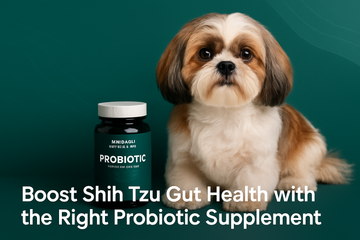
Probiotics for a Shih Tzu's Gut Health: The Short Answer
Yes, a multi-strain probiotic supports a Shih Tzu's gut health by helping rebalance the gut microbiome that food changes, stress, and antibiotics disrupt. Because Shih Tzus are a small, sensitive-stomach breed prone to loose stools, gas, and itchy skin, a daily probiotic with prebiotics and digestive enzymes is a practical way to steady digestion.
- Are probiotics good for a Shih Tzu?
- Yes. Probiotics are friendly gut microbes that aid digestion and support immunity, and vets often suggest them for dogs with diarrhoea, gas, or frequent stomach upsets (AKC, "Probiotics for Dogs," 2026). Shih Tzus, with their compact, sensitive digestive systems, are common candidates.
- What is the best probiotic for a Shih Tzu?
- Choose a multi-strain, vet-formulated product made for dogs, with prebiotics to feed the bacteria and a clear weight-based dose. JOLLY GUT® is built for this: 5 strains, 800 million CFU, prebiotics, and 7 digestive enzymes in a powder you mix into food.
- How do I know my Shih Tzu needs one?
- Loose or inconsistent stools, gas, frequent stomach upset after food changes, dull coat, itching, or a course of antibiotics are all common cues. Persistent or severe signs need a vet, not just a supplement.
Why Shih Tzus Are Prone to Sensitive Digestion
Shih Tzus are a small, brachycephalic (flat-faced) breed, and that build has knock-on effects for the gut. They tend to gulp air while eating, which contributes to gas and bloating, and their small stomach and short digestive tract leave little margin when diet, water, or routine changes suddenly. The result is a breed many Indian pet parents know well: happy and greedy at the bowl, then prone to loose stools, wind, or a fussy tummy a day later.
None of this is a disease on its own. It simply means a Shih Tzu's gut microbiome, the community of bacteria that helps digest food and trains the immune system, is easily knocked off balance. Probiotics are one of the tools vets reach for to help restore that balance after illness, stress, medication, or dietary change (AKC, "Probiotics for Dogs," 2026).
The India angle: heat and monsoon humidity make food spoil faster, and frequent diet switches (kibble brands, home food, festival treats, leftovers) are common. Both are classic triggers for an upset gut in a sensitive small breed. Storing food airtight, keeping water clean, and changing diets gradually over 5 to 7 days all reduce the load on your Shih Tzu's digestion before a supplement even enters the picture.
How to Tell If Your Dog Needs a Probiotic
Your dog may benefit from a probiotic when its digestion is visibly off or has recently been stressed. The clearest cues are diarrhoea or persistently soft stools, excess gas, repeated stomach upset, or a dog that seems to fall ill more easily than others for no obvious reason (AKC, "Probiotics for Dogs," 2026).
For a Shih Tzu specifically, watch for:
- Inconsistent stools: one good day, one soft day, especially after a treat or food change.
- Gas and rumbling tummy after meals, or obvious discomfort.
- A recent course of antibiotics, which wipes out good bacteria along with the bad.
- Dull coat, itching, or bad breath that grooming and dental care alone do not fix, since gut and skin health are linked.
- Stress events: travel, boarding, a new pet, or a move.
A probiotic is a support, not an emergency treatment. If your dog has bloody diarrhoea, repeated vomiting, lethargy, or signs that last more than a couple of days, see your vet first.
How Probiotics Support a Shih Tzu's Gut
Probiotics are the beneficial bacteria and yeasts that already live in your dog's gut in their billions, helping break down food, crowd out harmful microbes, produce certain vitamins, and support the immune system (AKC, "Probiotics for Dogs," 2026). A supplement tops up those populations when they have been depleted.
The evidence in dogs is most convincing in two situations a Shih Tzu owner will recognise. First, during and after antibiotics: in a controlled trial, healthy dogs given a synbiotic (probiotics plus prebiotics) alongside antibiotics had fewer antibiotic-associated digestive signs such as diarrhoea and reduced appetite than dogs that did not receive it (Whittemore et al., "Randomized, controlled, crossover trial of prevention of antibiotic-induced gastrointestinal signs using a synbiotic mixture in healthy research dogs," 2019). Second, during bouts of acute diarrhoea: in a clinical trial of dogs with acute gastroenteritis, a probiotic shortened the time to the last abnormal stool to a mean of 1.3 days versus 2.2 days on placebo (Herstad et al., "Effects of a probiotic intervention in acute canine gastroenteritis," 2010).
In clinical practice, Unleash Wellness® veterinary consultant Dr. Manveen Kaur (BVSc & AH) notes that small sensitive breeds like Shih Tzus tend to do best on a daily maintenance probiotic rather than an occasional one, because their gut is so easily disturbed by everyday changes in food and weather.
Which Probiotic Strains Matter for Dogs
Quality matters more than headline bacteria counts. Look for strains that are normally found in the canine gut and known to survive digestion. The AKC lists common, useful examples including Lactobacillus acidophilus, Enterococcus faecium, Bifidobacterium species, and several other Lactobacillus strains (AKC, "Probiotics for Dogs," 2026).
Three things make a real difference for a small breed:
- Multiple strains, not one. Different bacteria do different jobs, so a multi-strain blend covers more ground than a single-strain product.
- Prebiotics included. Prebiotics are fibres that feed the good bacteria so they can establish and thrive once they reach the gut.
- Digestive enzymes (protease, lipase, amylase) help a Shih Tzu's fast, compact digestive tract break food down more completely, which can ease gas and improve nutrient absorption.
This is exactly how JOLLY GUT® is built: 5 scientifically selected probiotic strains delivering 800 million CFU, combined with prebiotics and 7 digestive enzymes so the bacteria survive and work together.
What Is the Best Probiotic for a Shih Tzu in India?
The best probiotic for a Shih Tzu is a vet-formulated, multi-strain dog product with prebiotics and a clear weight-based dose, not a generic single-strain capsule. Avoid human probiotics, which are formulated for human guts and may contain sweeteners (like xylitol) that are dangerous to dogs.
For Indian pet parents, a powder is practical: it mixes into wet food or home-cooked meals and avoids fussy pill-giving with a small dog. JOLLY GUT® is a pre + probiotic powder formulated for dogs and cats of all breeds and ages, reviewed by Dr. Manveen Kaur (BVSc & AH), and dosed by weight. It is designed to help with sensitive stomachs, food intolerances, and the digestive upsets that follow a diet change, which are precisely the situations a Shih Tzu runs into.
Probiotic Dosing for a Shih Tzu by Weight
Most adult Shih Tzus weigh between 4 and 8 kg, so they fall into the smallest dosing band. JOLLY GUT® is given by weight, mixed into food, typically split across the day. One scoop is roughly 2 g.
| Dog weight | Daily JOLLY GUT® band | Typical breeds (India) |
|---|---|---|
| Up to 10 kg | Smallest dose band | Shih Tzu, Pug, Indian Spitz, Chihuahua |
| 10 – 20 kg | Mid band | Beagle, small Indie dogs |
| 20 – 40 kg | Higher band | Labrador, Golden Retriever |
| Over 40 kg | Largest band | German Shepherd, Rottweiler |
Use the scoop inside the pack and follow the on-pack feeding chart for your dog's weight. Give with meals so the bacteria are protected by food. Introduce gradually over 3 to 5 days if your Shih Tzu has a sensitive stomach. Dosing guidance reviewed by Dr. Manveen Kaur (BVSc & AH).
Puppies under 12 weeks have still-developing digestion, so check with your vet before starting any supplement on a Shih Tzu puppy.
Natural and Homemade Probiotics for Dogs
You can offer some natural probiotic foods, but they are a top-up, not a reliable replacement for a dosed supplement. The simplest options are plain, unsweetened yogurt or kefir with live cultures, fed in small amounts (AKC, "Probiotics for Dogs," 2026). Read labels carefully and avoid anything with added sugar or artificial sweeteners, and remember many dogs, Shih Tzus included, are sensitive to dairy and may get looser stools from it.
The limitation of home foods is dose: you cannot control how many live, dog-appropriate bacteria actually reach the gut, and the strains may not be the ones a dog needs. A vet-formulated product like JOLLY GUT® gives a known strain mix, a known CFU count, and a weight-based dose, which is why it is the more dependable choice for ongoing gut support.
Diet and Routine: The Foundation Under the Supplement
A probiotic works best on top of steady habits. For a Shih Tzu, that means consistent meal times, a high-quality and easily digestible food, and gradual transitions whenever you switch brands or recipes. Limit rich table scraps and festival leftovers, which are a frequent cause of the "sudden soft stool" Indian pet parents report.
Fresh, clean water and gentle daily exercise help digestion too, and managing stress matters because anxiety and routine disruption can upset the gut directly. Plain boiled pumpkin or a little cooked sweet potato can add gentle fibre during a settling-in period. Pairing these basics with a daily probiotic gives a sensitive small breed the steadiest path to a calm gut.
Side Effects: Are Probiotics Safe for Shih Tzus?
Probiotics are considered very safe for dogs. In studies of healthy pets, probiotics given as directed were safe and passed through the digestive system as intended (AKC, "Probiotics for Dogs," 2026). The main thing to watch for in a small breed is a brief adjustment period.
- Mild, temporary gas or soft stool in the first few days as the gut rebalances. Start at the lower end and build up.
- Dairy-based natural sources (yogurt, kefir) can loosen stools in dairy-sensitive dogs. A non-dairy supplement avoids this.
- Never use human probiotics with sweeteners; xylitol is toxic to dogs.
Stop and call your vet if you see vomiting, persistent or bloody diarrhoea, or your dog is off food and lethargic. A probiotic supports digestion; it does not treat serious gastrointestinal disease.
Frequently Asked Questions
Are probiotics good for a Shih Tzu?
Yes. Probiotics are friendly gut bacteria that aid digestion and support immunity, and vets commonly suggest them for dogs with diarrhoea, gas, or frequent stomach upset. Shih Tzus, with their small, sensitive digestive systems, are typical candidates. A multi-strain product such as JOLLY GUT® is a practical daily option.
What is the best probiotic for a Shih Tzu dog?
The best choice is a vet-formulated, multi-strain dog probiotic with prebiotics and a clear weight-based dose, not a single-strain human capsule. JOLLY GUT® fits this: 5 strains, 800 million CFU, prebiotics and 7 digestive enzymes in a powder you mix into food, dosed for small breeds.
How do I tell if my dog needs a probiotic?
Look for diarrhoea or persistently soft stools, excess gas, repeated stomach upset, a recent course of antibiotics, or a dog that seems to fall ill easily. For Shih Tzus, inconsistent stools after food changes and gut-linked dull coat or itching are common cues. Persistent or severe signs need a vet.
How can I improve my Shih Tzu's gut health?
Feed a consistent, high-quality, easily digestible diet, change foods gradually over 5 to 7 days, keep food airtight and water clean (important in Indian heat and monsoon), and add a daily multi-strain probiotic with prebiotics. Manage stress and exercise gently, and see a vet for ongoing problems.
What can I give my dog as a natural probiotic?
Small amounts of plain, unsweetened yogurt or kefir with live cultures can act as a natural probiotic, but check labels and avoid added sugar or sweeteners. Many dogs are dairy-sensitive, so go slow. For a reliable strain mix and dose, a vet-formulated supplement is more dependable than home foods.
Can a Shih Tzu puppy take probiotics?
Puppies under about 12 weeks have still-developing digestion, so check with your vet before starting any supplement. For older Shih Tzu puppies, a gentle multi-strain probiotic introduced gradually can help during weaning, food transitions, or after a stomach upset.
What is the best time to give probiotics to my dog?
Give probiotics with meals so the bacteria are buffered by food on the way through the stomach. With JOLLY GUT®, the dose is usually split between morning and evening feeds. Consistency day to day matters more than the exact time.
Recommended for Shih Tzu Gut Health: JOLLY GUT®
For a sensitive small breed, the priority is a steady, dosed daily probiotic. JOLLY GUT® is a pre + probiotic powder built for exactly that, and it mixes straight into food so there is no pill battle with a fussy Shih Tzu.
- What's inside: 5 probiotic strains, 800 million CFU, plus prebiotics and 7 digestive enzymes so the bacteria survive and work together.
- Best for: sensitive stomachs, food intolerances, loose stools after diet changes, gas, and supporting immunity and coat.
- How to use: dose by weight (smallest band for most Shih Tzus), mixed into food, split morning and evening.
- Where to buy: JOLLY GUT® probiotic for dogs (from ₹899, 200 g, free shipping over ₹500 in India).
Formula reviewed by Dr. Manveen Kaur (BVSc & AH), Veterinary Consultant at Unleash Wellness®, for the Indian climate and dietary norms.
Conclusion
A Shih Tzu's gut is small, fast, and easily knocked off balance by the food swaps, heat, and humidity of everyday Indian life. A daily multi-strain probiotic with prebiotics and digestive enzymes is one of the simplest ways to keep that gut steady, ease the loose stools and gas that come with a sensitive stomach, and support immunity and coat from the inside. Pair it with consistent meals, gradual diet changes, and clean water, and see your vet for anything persistent or severe. For a dependable, weight-dosed option made for Indian pets, JOLLY GUT® is a sensible place to start.
Sources & References
Reviewed by Dr. Manveen Kaur (BVSc & AH), Veterinary Consultant at Unleash Wellness. Health claims in this article are supported by the following sources:
- American Kennel Club. Probiotics for Dogs (Updated 2026). akc.org
- Whittemore, J.C. et al. Randomized, controlled, crossover trial of prevention of antibiotic-induced gastrointestinal signs using a synbiotic mixture in healthy research dogs. Journal of Veterinary Internal Medicine (2019). PMC6639531
- Herstad, H.K. et al. Effects of a probiotic intervention in acute canine gastroenteritis, a controlled clinical trial. Journal of Small Animal Practice (2010). PubMed 20137007


