

When your dog scratches non-stop, it is not being naughty, it is asking for help. In Indian homes, itchy skin flares hardest through the humid monsoon months and the dusty pre-winter weeks, when pollen, fleas and yeast all peak together. The good news for 2026: most mild itching can be calmed at home with simple, vet-sensible remedies before it snowballs into raw, infected skin. Below are 12 safe home remedies for an itchy dog, plus clear signs that tell you it is time to call the vet.
Understanding Why Your Dog Is Scratching

Every dog scratches now and then, but constant scratching, licking or chewing means something is genuinely bothering the skin. According to the Merck Veterinary Manual, the three most common causes of itching (pruritus) in dogs are parasites, infections and allergies, and itching is a sign rather than a diagnosis on its own. Getting the cause right matters, because a flea remedy will not fix a food allergy, and a soothing bath will not clear a bacterial infection.
Common Triggers for Itchy Skin in Dogs
Parasites are the first thing to rule out. Fleas, ticks and microscopic mites are extremely common in India, and even a single flea bite can set off intense itching in a sensitive dog. Tick season also brings the added worry of tick fever, so parasite control is non-negotiable.
Environmental allergens like pollen, dust mites, mould and grasses trigger what vets call atopic dermatitis. The Merck Veterinary Manual notes that breeds predisposed to these airborne allergies include Golden Retrievers, Labrador Retrievers, Shih Tzus and Boxers, all popular in Indian homes, and that signs usually appear between 6 months and 3 years of age. The feet, face, ears, front legs and belly are the areas most often affected.
Food sensitivities to proteins such as chicken, beef, dairy or wheat can develop even to foods your dog has eaten for years. Yeast and bacterial overgrowth, encouraged by humidity and skin folds, is another frequent driver, especially in the monsoon.
Normal Scratching vs a Real Problem
Occasional scratching to shift loose hair or a passing itch is perfectly normal. Watch more closely when the scratching interrupts sleep or play, creates bald patches or wounds, or comes with redness, swelling, odour or discharge. A simple diary of when the itching worsens, plus any recent change in food, bedding or environment, gives your vet a valuable head start.
12 Home Remedies to Soothe an Itchy Dog
These remedies are grouped into quick baths and rinses, kitchen ingredients and everyday care. Start with one or two, watch how your dog responds, and stop anything that seems to irritate the skin further.
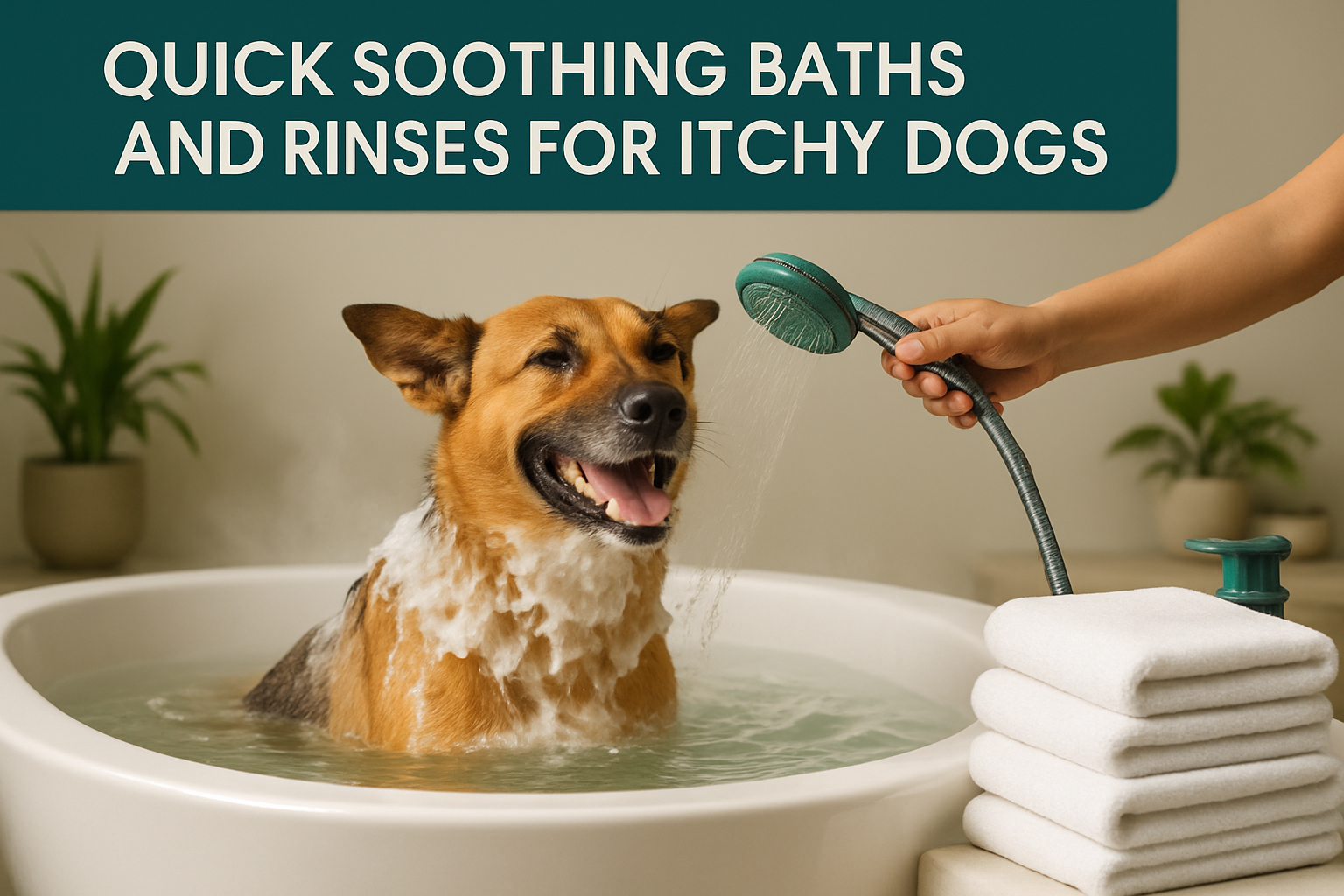
1. Colloidal Oatmeal Bath
Plain oatmeal contains compounds called avenanthramides that help calm inflamed, itchy skin. Grind 1 cup of unflavoured oatmeal into a fine powder, stir it into a tub of lukewarm water (never hot, which worsens irritation), and let your dog soak for 10–15 minutes while you gently pour the milky water over the coat. Rinse, then pat dry rather than rub. Ideal for all-over itch and dry, flaky skin.
2. Cool Green Tea or Chamomile Soak
Green tea and chamomile carry natural anti-inflammatory compounds. Steep 3–4 tea bags in hot water, cool the brew completely, then either pour it over your dog after a bath or dab it onto specific patches with a clean cloth. Use 2–3 times a week on irritated spots until they settle.
3. Diluted Apple Cider Vinegar Rinse
Apple cider vinegar can help rebalance skin pH and discourage yeast. Mix 1 part raw, unfiltered vinegar with 2 parts cool water and work it gently into the coat after bathing. One firm rule: never use it on open wounds, cuts, raw or broken skin, as it will sting badly. Skip essential oil add-ins, since many are unsafe for dogs.
4. Cool Compress for Acute Hot Spots
When a patch flares suddenly, a cool, damp cloth held against it for a few minutes brings quick relief and reduces the urge to scratch. It is the gentlest first response for a red, angry hot spot while you decide on next steps.

5. Virgin Coconut Oil
Coconut oil, a staple in most Indian kitchens, is rich in medium-chain fatty acids that moisturise and form a protective barrier over dry, flaky skin. Warm a small amount between your palms and massage it into the dry patches. For very dry coats, leave a thin layer on for 10–15 minutes once a week, then rinse. A little goes a long way, so avoid greasing up the whole dog.
6. Aloe Vera Gel for Hot Spots
Fresh aloe gel gives cooling, anti-inflammatory relief on hot spots. Apply only the clear inner gel to irritated areas, 2–3 times a day. Important safety note: the ASPCA lists aloe as toxic to dogs if eaten, because the leaf and latex contain saponins and anthraquinones, so use it topically only and stop your dog from licking it off. Keeping a tube of pure gel in the fridge makes it even more soothing.
7. Plain Unsweetened Yogurt
Many stubborn itches involve yeast overgrowth. A thin layer of chilled plain yogurt dabbed on irritated skin for 5–10 minutes, then wiped away, cools the area and its live cultures help crowd out yeast. A small spoonful mixed into meals can also support gut and skin health. Always choose plain, unsweetened yogurt with no artificial sweeteners.
8. An Omega-3 Rich Diet
What goes into the bowl shows up on the skin. Omega-3 fatty acids have a genuine anti-inflammatory effect on itchy, allergic skin. In a randomised, double-blind, placebo-controlled trial of 36 dogs with atopic dermatitis, a mainly omega-3 supplement produced a significantly greater improvement in itch scores than placebo over 12 weeks. Because everyday Indian dog diets are often low in these fats, a dedicated skin supplement helps close the gap. Our NO RUFF omega-3 supplement pairs omega-3s with biotin and zinc to support the skin barrier from the inside. Think of it as long-term diet support for chronic itch and shedding, not an overnight cure.
9. Gentle, Regular Grooming
Brushing daily lifts out pollen, dust and loose hair before they settle into the skin, and it spreads the coat's natural oils for a stronger barrier. Use a soft brush for short coats and a slicker brush plus comb for longer or double coats. During high-pollen or dusty spells, a quick wipe-down with a damp cloth after walks removes allergens your dog would otherwise carry indoors.
10. A Calmer Bathing Routine
Over-bathing strips protective oils and can make itching worse. For most itchy dogs, a bath every 3–4 weeks with a gentle, hypoallergenic, pet-specific shampoo is plenty. Where water is very hard, a final rinse with plain filtered water helps prevent mineral residue that can further dry the skin.
11. Consistent Flea and Parasite Control
Since parasites are a leading cause of itching, year-round flea and tick control is one of the most effective home remedies of all. Alongside your vet-recommended preventive, wash bedding weekly in hot water, vacuum floors and sofas, and treat the whole home, not just the dog, since flea eggs live in the environment.
12. An Allergen-Reduced Home
Your home has a direct say in your dog's skin. Vacuum with a HEPA filter to cut dust mites and dander, wash bedding weekly in fragrance-free detergent, and aim to keep indoor humidity around 40–60%. This last point matters in India: damp monsoon air feeds yeast and fungal itch, so good ventilation, dry bedding and a dehumidifier or fan in muggy rooms genuinely help.
When to See a Vet
Home remedies are for mild, occasional itching. Some skin problems need a professional, and delaying can let a small flare turn into a painful, infected mess. Based on veterinary guidance from the Merck Veterinary Manual, book a vet visit if you notice any of these red flags:
• Itching that does not improve within 1–2 weeks of home care, or that keeps coming back
• Bald patches, raw sores, or skin your dog has scratched or chewed open
• A bad odour, oily or crusty skin, or any oozing and discharge, all signs of a secondary bacterial or yeast infection
• Redness, swelling, or heat in the skin, or repeated ear infections
• Scratching intense enough to break sleep, plus signs of pain, restlessness or low energy
• A visible flea infestation, or itching in a young puppy or a senior dog
The Merck Veterinary Manual notes that infections often ride along with hair loss, scaling, odour and discharge, and may need a 3 to 4 week course of prescription treatment, something no home remedy can replace. Your vet can also run a diet trial or allergy work-up to find the real trigger.
Frequently Asked Questions
How do I relieve my dog's itching fast?
A cool oatmeal bath, a cold compress, or a light layer of coconut oil soothes irritated skin quickly. For long-term skin strength, an omega-3 supplement such as NO RUFF supports the skin barrier from within.
Is coconut oil safe for a dog's itchy skin?
Yes, virgin coconut oil is safe as a topical moisturiser for dry, flaky patches. Use a small amount, and if the itching does not ease within a couple of weeks or the skin looks infected, see your vet.
Can I put aloe vera on my dog?
Only the clear inner gel, and only on the skin. The ASPCA lists aloe as toxic to dogs if eaten, so apply it topically and stop your dog from licking it off. Never let your dog swallow the leaf or latex.
What is the best natural allergy relief for dogs?
There is no single cure, but aloe gel, diluted apple cider vinegar rinses and an omega-3 rich diet all help. Supporting the gut with JOLLY GUT probiotics can also help manage allergic responses from the inside out.
Conclusion
Most mild itching responds well to gentle home care: a soothing bath, a kitchen remedy, better parasite control and an omega-3 rich diet. Watch your dog's response, keep the skin clean and dry, and never ignore the red flags that call for a vet. A holistic routine, inside and out, is the surest path to a calm, comfortable, scratch-free dog.
Sources
• Merck Veterinary Manual, Itching (Pruritus) in Dogs (Moriello KA,
DACVD):
merckvetmanual.com
• Merck Veterinary Manual, Allergies in Dogs (White SD &
Moriello KA, DACVD):
merckvetmanual.com
• ASPCA Animal Poison Control, Aloe (toxic plants):
aspca.org
• Müller MR, et al. Cyclosporine-sparing effects of
polyunsaturated fatty acids in canine atopic dermatitis. Vet J. 2016 (PMID
26975448):
pubmed.ncbi.nlm.nih.gov
For persistent skin and coat issues, consider Unleash Wellness® supplements that support skin health from within, formulated by veterinarians without preservatives or common allergens.


