

How Long Are Dogs in Heat: The Short Answer
A dog is in heat (proestrus plus estrus combined) for about two to four weeks, and visible bloody discharge usually lasts roughly 14 to 21 days. Most dogs come into heat about twice a year, on average every 5 to 11 months, though small breeds may cycle three times yearly and giant breeds only once.
- How long does the bleeding last?
- Bloody vaginal discharge, the most noticeable sign, usually lasts 14 to 21 days. It starts dark and bloody, then thins to a watery, straw-pink colour as she enters the fertile estrus phase (Cornell Riney Canine Health Center, 2024).
- How often does it happen?
- Most dogs cycle twice a year. Smaller breeds may cycle three times, giant breeds once, and young dogs can take up to two years to settle into a regular pattern (VCA Hospitals, 2025).
- When is she fertile?
- During estrus, which generally lasts about 5 to 9 days (range 1 to 20). She can fall pregnant on her very first heat, so keep her supervised and away from intact males throughout.
Every female dog parent in India faces the job of managing their pet through heat cycles. Understanding the heat period is part of responsible ownership and protects your dog's wellbeing. This guide covers everything you need to know about the canine estrus cycle, from how long it lasts to the day-to-day care your dog needs.
The Complete Dog Heat Cycle Timeline
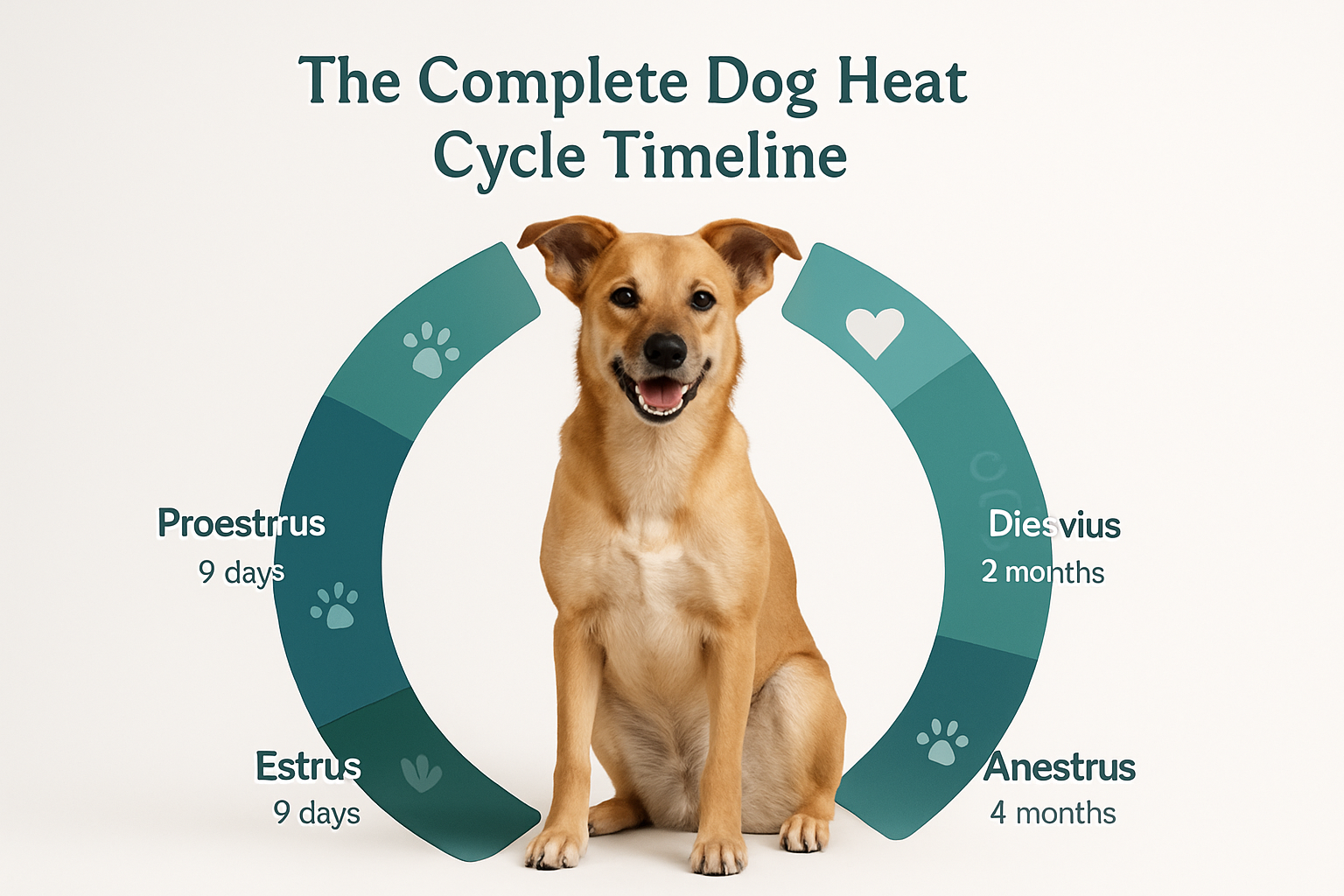
Knowing how long are dogs in heat is essential for every pet parent. The heat cycle is a complete reproductive process that affects your dog's behaviour, comfort, and health through her life.
The Active Heat Lasts About 2 to 4 Weeks
What people call "heat" is the proestrus and estrus stages combined. Together these usually run two to four weeks, and the bloody vaginal discharge that owners notice most typically lasts 14 to 21 days. There is wide variation between individual dogs, so use these as guides, not fixed dates.
Heat Cycles Occur About Twice a Year
Most dogs come into heat twice per year, with the interval varying between breeds. Cornell puts the average at roughly every 5 to 11 months. Small breeds may cycle three times a year, giant breeds only once, and a few breeds such as the Basenji and Tibetan Mastiff cycle once yearly.
Young dogs often have irregular cycles when they first start, and it can take up to two years for a regular pattern to settle. In India, pet parents managing intact females should simply track each cycle's start date rather than assume a fixed schedule.
Four Distinct Reproductive Phases
The complete cycle has four stages that together explain how long a dog is in heat (Cornell Riney Canine Health Center, 2024):
Proestrus (about 6 to 11 days): The opening stage, with vulvar swelling and bloody discharge. She attracts male dogs but is not yet receptive to mating.
Estrus (about 5 to 9 days, range 1 to 20): The fertile window. Discharge lightens to straw-pink and she becomes receptive. This phase sets peak breeding potential.
Diestrus (progesterone phase, tapering over roughly 10 to 30 days): Hormone levels stay elevated then decline, whether or not she is pregnant.
Anestrus (resting phase): The quiet period between cycles. The uterus repairs itself through a process called involution that takes about four months before the next cycle can begin.
Signs Your Dog Is in Heat (And How Long Each Phase Lasts)
Recognising the phases makes the whole cycle easier to manage. The earliest sign is swelling of the vulva, though it is not always obvious; bloody discharge is usually the first thing owners actually notice (VCA Hospitals, 2025).
Proestrus (about 6 to 11 days): swelling, bloody discharge, male attention
The first stage signals the start of the cycle. The vulva swells and a dark, bloody discharge appears. Male dogs take sudden interest, but she rejects them.
Key signs to watch for:
- Swollen vulva that feels firm
- Dark red or brownish discharge
- Increased licking of the genital area
- Male dogs showing sudden interest
- Your dog refusing advances despite the attention
Estrus (about 5 to 9 days): the fertile, receptive phase
This is the true fertile "heat". Discharge changes from dark red to a lighter pink or straw colour and the vulva softens. She ovulates around the time the discharge turns watery, and she can conceive at any point during estrus because sperm can survive about a week in the reproductive tract (VCA Hospitals, 2025).
Notable changes include:
- Discharge becoming lighter and less bloody
- Vulva softening and becoming receptive
- Flagging behaviour, where she moves her tail to one side
- Accepting male attention
- Restlessness and more frequent urination
Diestrus and anestrus: the gradual return to normal
After estrus, she enters diestrus, the longest active phase. Progesterone rises and then declines over roughly 10 to 30 days, whether or not she is pregnant. Discharge stops, swelling reduces, and her interest in mating disappears. Anestrus follows, a months-long resting phase while the uterus repairs before the next cycle. Pregnancy, if it occurs, lasts about nine weeks (63 days).
Heat Cycle Variations by Breed and Age
Every dog varies, and both size and age shape the pattern. Your Labrador's cycle will look different from a Chihuahua's.
Small Breeds Cycle More Often
Small breeds such as Pomeranians, Chihuahuas, and the Indian Spitz may cycle three times a year rather than twice. Each individual heat still lasts the usual length, but the gaps between cycles are shorter, so small-breed owners need to track dates more closely.
Larger Breeds Follow Longer Intervals
Large and giant breeds such as German Shepherds, Golden Retrievers, and the Rajapalayam usually cycle once or twice a year, with longer, more predictable gaps. The active heat itself stays a similar length; only the spacing changes.
First Heat Timing Varies Widely
A first heat can begin anywhere from 6 to 24 months of age, with smaller breeds averaging earlier. Small breeds often start at 6 to 8 months; large and giant breeds may not have a first cycle until 18 to 24 months. Medium-sized Indian Pariah dogs commonly begin around 8 to 12 months.
Senior Dogs Keep Cycling
Unlike humans, dogs do not go through menopause, so unspayed seniors continue to have heat cycles for life. Cycles often become more irregular with age, with longer gaps, lighter bleeding, or shorter fertile windows. Any sudden change, foul-smelling discharge, or signs of illness in an older intact female should be checked by a vet, as it can point to pyometra, a serious uterine infection.
How to Tell When Your Dog Has Finished Her Heat
Heat is over when the swelling has gone down, the discharge has stopped completely, and male dogs no longer interest her. This shift marks the end of estrus and the start of diestrus, when she will no longer stand to be mated (Cornell Riney Canine Health Center, 2024). Because the fertile estrus phase can run up to about three weeks from the first signs, keep her supervised and away from intact males until the vulva returns to its normal size, usually within a week of the discharge ending. A simple way to confirm she is no longer receptive is that she will sit down or turn away when a male approaches, instead of flagging her tail to one side.
Can You Stop or Shorten a Dog's Heat at Home?
There is no safe home remedy that stops or shortens a heat cycle once it has started; the cycle is hormone-driven and has to run its course. What you can do is manage it: keep her indoors and supervised, use a washable dog nappy for discharge, walk her on a lead in quiet areas, and never leave her unattended outdoors where intact males can reach her. Drugs that suppress heat exist but carry real risks and are only used under veterinary direction. The only permanent way to prevent future heat cycles is spaying, an ovariohysterectomy or ovariectomy, which also prevents pyometra and reduces the risk of mammary tumours (Cornell Riney Canine Health Center, 2024). If your dog is already in heat, most vets advise waiting about two months after the cycle to spay, so hormones settle and surgery carries less bleeding risk.
Managing Your Dog During Heat Cycles
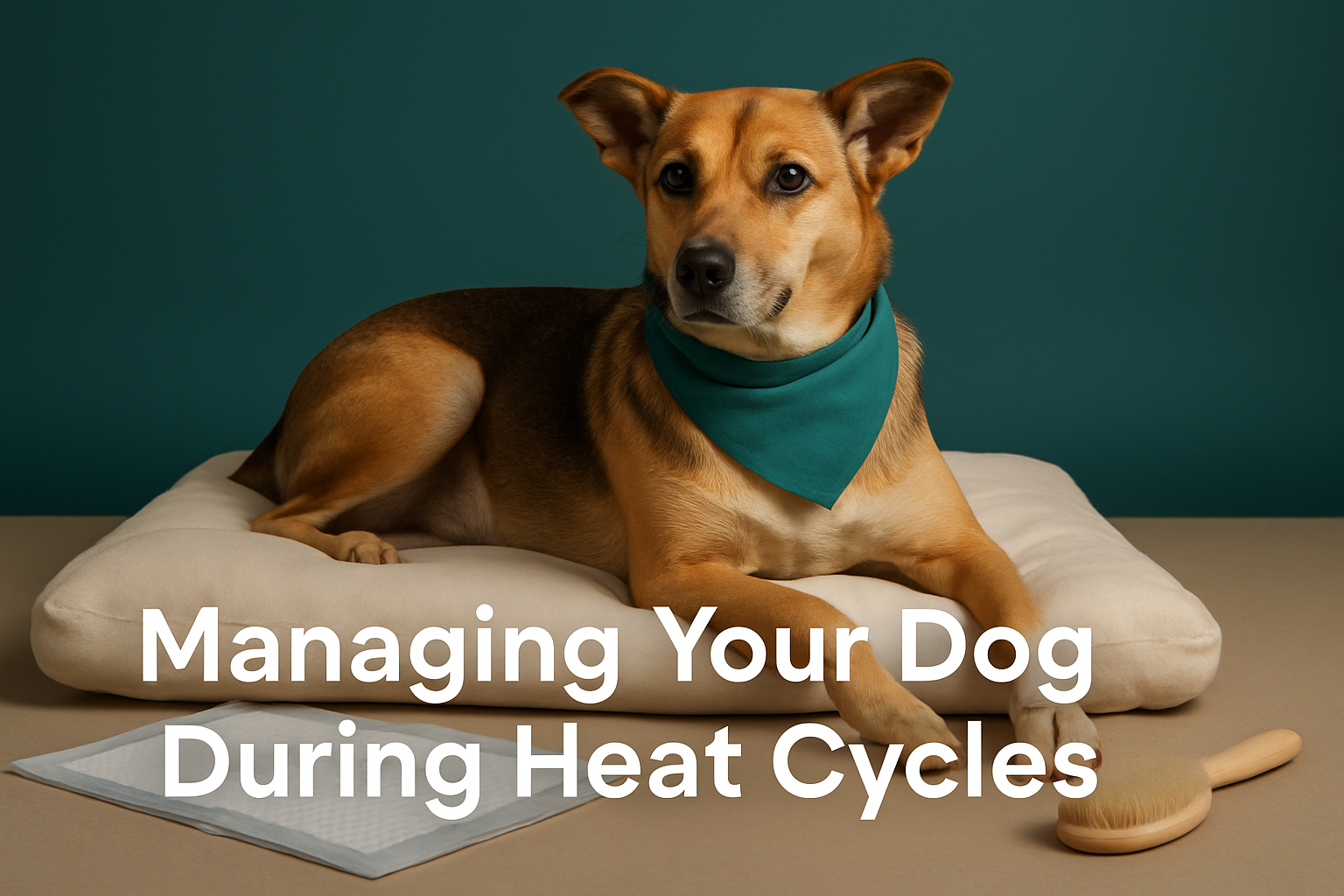
Knowing how long the heat lasts helps you plan for the few demanding weeks ahead, when your dog needs extra care to stay comfortable and clean.
Creating a Comfortable, Clean Environment
Dog nappies manage discharge and protect your floors and furniture without restricting movement. Set up washable bedding in a quiet resting spot and change it often, since discharge can attract bacteria and cleanliness lowers infection risk. In humid Indian conditions, dry her bedding thoroughly to discourage damp-related skin trouble.
Supporting Nutrition During Heat
Heat places extra demand on the body. Keep her on high-quality protein and plenty of fresh water. Some dogs eat less during heat, so smaller, more frequent meals can help. A balanced daily multivitamin such as VITAM PAWS® can support overall wellness during this period, but it does not alter the cycle itself. Ask your vet before adding any new supplement.
Monitoring Behaviour and Exercise
Expect restlessness, frequent urination, and attention-seeking, all normal responses to hormone shifts. Keep up gentle exercise but with strict supervision, since she will attract intact males. Walk on a lead, pick quieter routes, and keep outings short. Watch for warning signs: lethargy, refusing food, or foul-smelling discharge all warrant a vet visit.
Frequently Asked Questions
How long are female dogs usually in heat?
The active heat (proestrus plus estrus) lasts about two to four weeks, and bloody discharge usually runs 14 to 21 days. Most dogs cycle twice a year, though the exact length varies by breed and individual.
How do you know when a dog is finished her heat?
Her heat is over when the vulvar swelling subsides, the discharge stops completely, and she no longer attracts or accepts male dogs. The vulva usually returns to normal size within about a week of the discharge ending.
How long is a dog bleeding in heat?
Bloody discharge typically lasts 14 to 21 days. It begins dark and bloody during proestrus, then thins to a watery, straw-pink colour as she enters the fertile estrus phase.
How do I get my female dog out of heat?
There is no safe way to stop a heat cycle once it starts; it must run its course over a few weeks. You can manage it with supervision, a dog nappy, and lead walks. The only permanent prevention of future cycles is spaying, done in consultation with your vet.
What is the 7 7 7 rule for dogs?
The "7-7-7 rule" is an informal guide to the dog heat cycle: roughly 7 days coming into heat (proestrus), about 7 days fertile (estrus), and around 7 days going out of heat. It is only a rough memory aid; real durations vary, so track your own dog's dates.
How often does a dog come into heat in a year?
Most dogs come into heat about twice a year, on average every 5 to 11 months. Small breeds may cycle three times yearly, while giant breeds and a few specific breeds may cycle only once a year.
Conclusion
Understanding your dog's heat cycle, about two to four weeks of active heat, repeating roughly twice a year, helps you keep her comfortable and prevent unwanted pregnancy. Track each cycle's start date, supervise her closely through the fertile estrus phase, and talk to your vet about spaying if you do not plan to breed. Being prepared makes the whole season easier for both of you.
Sources & References
Reviewed by Dr. Manveen Kaur (BVSc & AH), Veterinary Consultant at Unleash Wellness. Health claims in this article are supported by the following sources:
- Cornell University Richard P. Riney Canine Health Center. Dog estrous cycles (2024). vet.cornell.edu
- VCA Animal Hospitals. Estrous Cycles in Dogs (2025). vcahospitals.com


